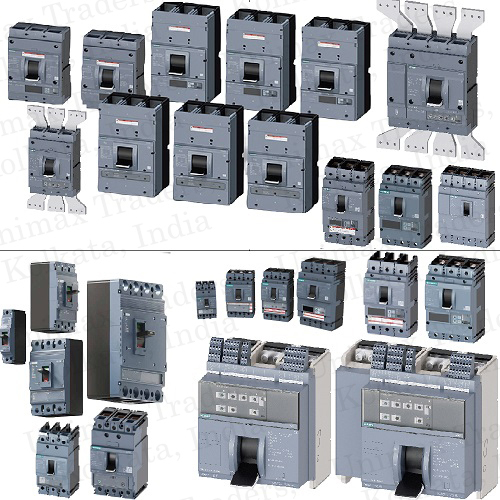
About Siemens Mccb Sentron 3va, 3vm Sinova 3vj
An MCCB, or Molded Case Circuit Breaker, is an electrical protection device that safeguards circuits from overcurrents (overloads and short circuits) by automatically interrupting the excessive current flow. Unlike smaller MCBs, MCCBs are designed for higher current applications, feature an adjustable thermal-magnetic trip mechanism for protection against prolonged overloads and sudden short circuits, and are housed in a robust, molded case for protection. They are widely used in industrial and large commercial settings to protect high-capacity equipment. Exceptional Protection and ReliabilitySentron 3VA, 3VM, and Sinova 3VJ MCCBs are engineered for superior overload and short-circuit protection across varied applications. Utilizing advanced arc chute technology, these breakers ensure safe circuit disconnection, minimizing fire and equipment risks while extending the operational lifespan to up to 20,000 operations.
Flexible Installation and Wide CompatibilityWith both panel and DIN rail mounting options (as per model), the MCCBs offer flexibility for diverse electrical setups. They accommodate 3 or 4 poles and can be connected via bolt-on, lug, or terminal methods. Installation is straightforward for both fixed and plug-in/draw-out models, supporting integration in new or retrofit systems.
Comprehensive Accessory SupportMeet operational and safety requirements with auxiliary contacts, shunt trips, and under-voltage releases available as accessories. These features enable remote monitoring, control, and enhanced system protection, ensuring seamless integration into automated distribution frameworks.
FAQ's of Siemens Mccb Sentron 3va, 3vm Sinova 3vj:
Q: How do I select between fixed, plug-in, or draw-out installation for Siemens MCCB models?
A: Choosing the installation type depends on your application's accessibility and maintenance needs. Fixed units suit permanent installations, plug-in models allow quicker replacements, and draw-out types provide easy maintenance without disconnecting power, making them ideal for frequently serviced systems.
Q: What are the benefits of advanced arc extinguishing chambers in these MCCBs?
A: The advanced arc extinguisher design rapidly interrupts fault currents, providing safer circuit breaking. This minimizes arc flash hazards, reduces equipment wear, and enhances overall protection for both users and electrical infrastructure.
Q: When should I opt for electronic trip rather than thermal-magnetic trip in these circuit breakers?
A: Electronic trip models are best when precise, customizable protection is needed. They offer settings for instantaneous and delayed tripping, providing greater sensitivity and adaptability compared to standard thermal-magnetic types, making them suitable for sensitive or critical loads.
Q: Where can Siemens Sentron 3VA, 3VM, and Sinova 3VJ series MCCBs be used?
A: These MCCBs are designed for use in industrial facilities, commercial buildings, and power distribution networks across India. They're suitable for low-voltage distribution panels requiring reliable protection against overloads and short circuits.
Q: What auxiliary accessories are available and why are they useful?
A: Optional accessories include auxiliary contacts for status indication, shunt trips for remote disconnection, and under-voltage releases for automatic tripping during voltage drops. These enhance operational flexibility and safety in automated electrical systems.
Q: How does IP protection (IP20/IP30) benefit my installation?
A: IP20 and IP30 ratings ensure a robust level of protection against solid particles and accidental contact, contributing to electrical safety. Choosing the appropriate IP rating helps match your installation's environmental and safety requirements.
Q: What is the process for integrating a Siemens MCCB with existing power distribution systems?
A: Integration involves selecting the correct rated current, curve, and pole configuration, mounting the breaker (panel or DIN rail), connecting via bolt-on lugs/terminals, and optionally installing accessories. Ensure compliance with wiring standards and verify the trip settings to match your system's protection requirements.
 Send Inquiry


 Send Inquiry

 Send Inquiry